Modern Procurement: Accelerating B2B RFPs with Reverse Proposals
Modern Procurement: Accelerating B2B RFPs with Reverse Proposals
The Request for Proposal (RFP) process is one of the most inefficient workflows in enterprise procurement. Buyers write massive requirements documents, email them manually to a list of vendors, and receive conflicting spreadsheets that take weeks to compare.
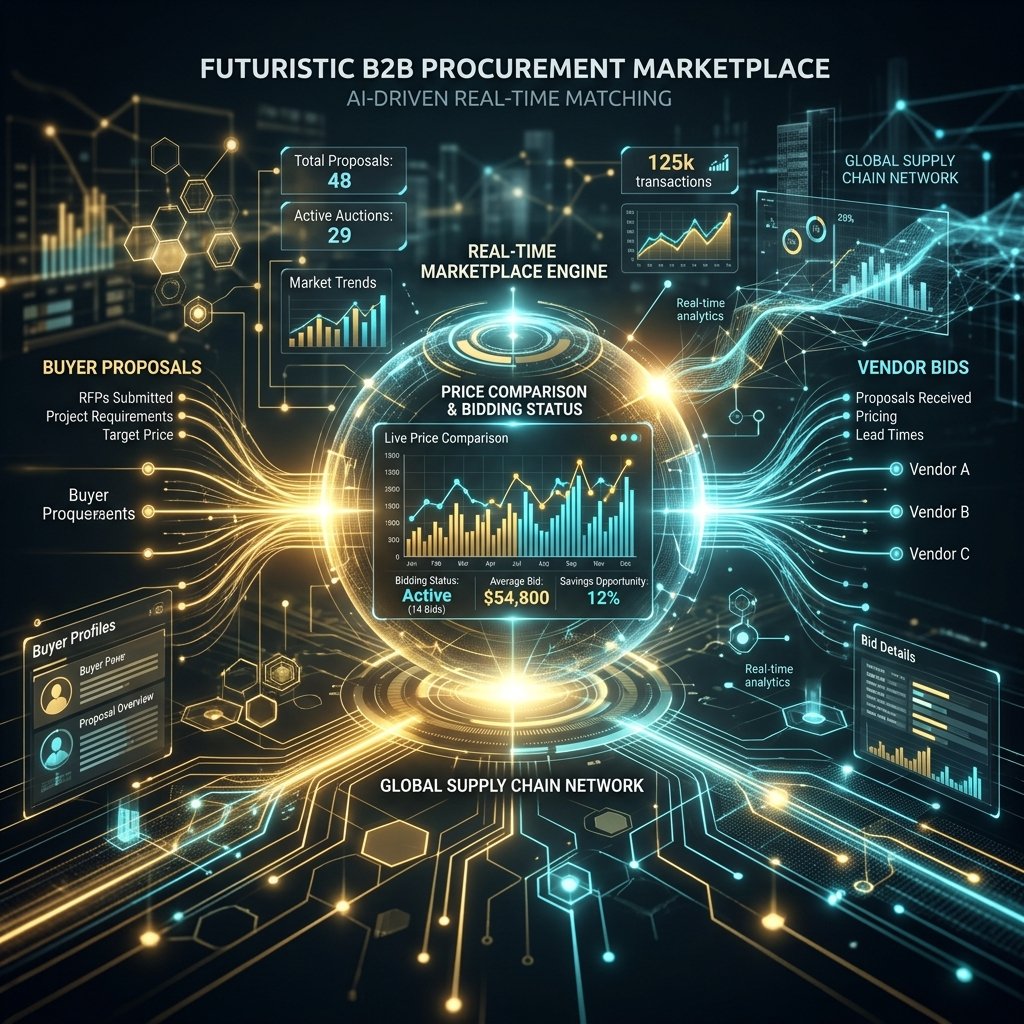
A Reverse Proposal marketplace flips this dynamic, bringing speed, transparency, and structure to B2B procurement.
What is a Reverse Proposal?
In a reverse proposal model:
- The Buyer publishes a structured project requirements sheet, defining the scope, mandatory deliverables, and deadline.
- The Vendors (suppliers) submit bids directly through the same platform, utilizing standardized pricing breakdown blocks.
- The System calculates a real-time anonymized ticker showing the lowest bid, enabling healthy marketplace competition.
The Advantages of Digital Procurement
1. Instant Side-by-Side Comparison
Since all vendors submit estimates against the exact same scope items, the buyer can compare bids side-by-side automatically, eliminating hours of copying data into local spreadsheets.
2. High Security and OTP Controls
For sensitive projects, the procurement manager can set the proposal to private. Only invited supplier emails can access the bidding form by requesting a secure One-Time Password (OTP) verification code.
3. Integrated Contract Generation
Once a bid is selected, the platform instantly converts the scope and price details into a binding legal contract, ready for e-signatures.
Bring your agency procurement processes into the modern era. Start publishing smart bids using Agenhub's Procurement Engine.